Kā Mākou Mo’olelo
Our Story
Mission
Our Story
Reclaim and preserve the living culture of the po‘e kahiko (people of old) in order to strengthen the kinship relationships between the ‘āina (land, that which nourishes us) and all forms of life necessary to sustain the balane of life on these venerable lands.
OUR MISSION
In the early 1970s, a group of young people from the Waiʻanae community began exploring the uplands of Waiʻanae Valley and uncovered ancient loʻi kalo (taro terraces) that had long been abandoned.
What started as simple exploration quickly turned into restoration, as they committed themselves to reviving both the land and the practices tied to it.
From those early days, Uncle Eric Enos emerged as a steady and guiding force. Under his leadership, Kaʻala Farm grew from a grassroots effort into what is now the Kaʻala Farm and Cultural Learning Center—while staying grounded in its original purpose: mālama ʻāina (caring for the land), sharing knowledge, and strengthening community.
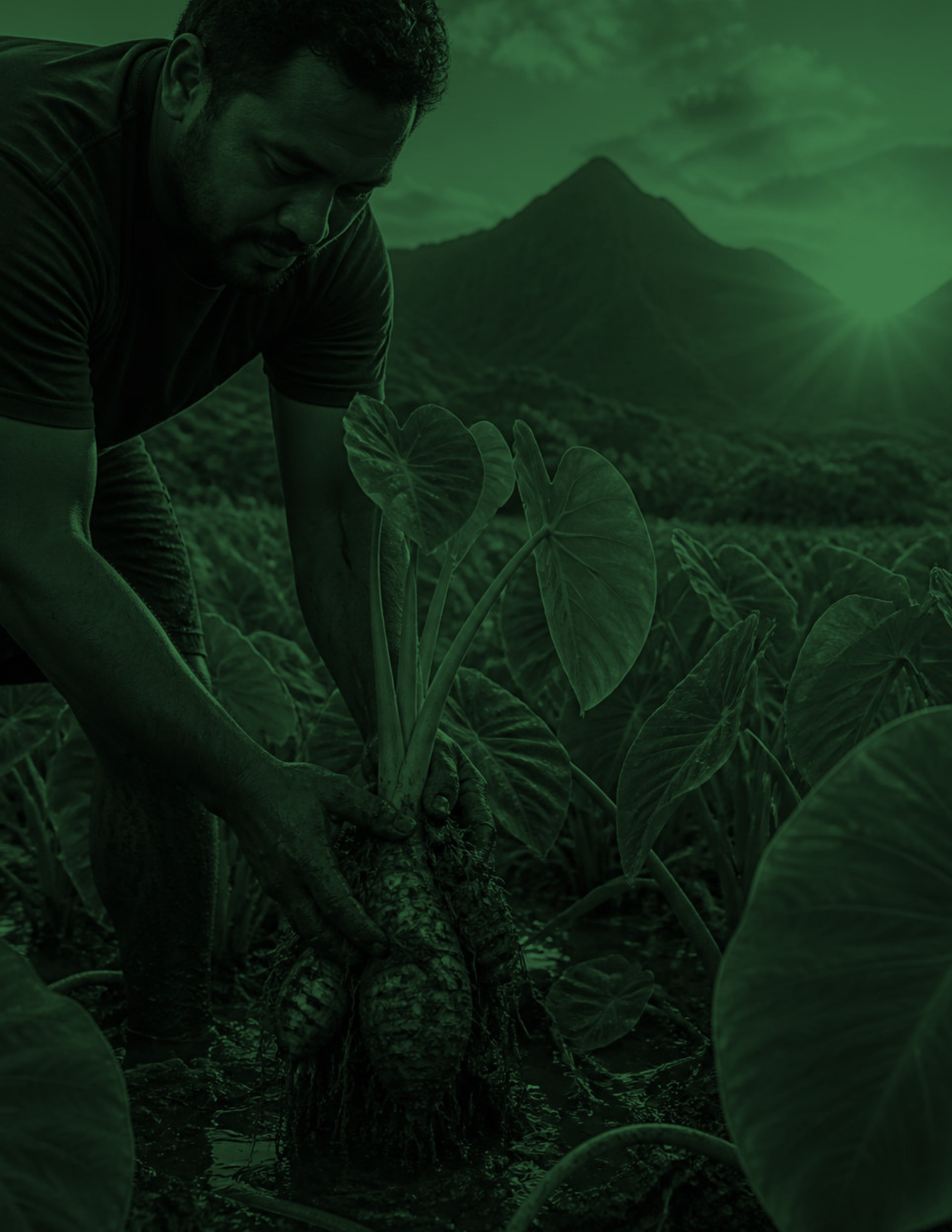
Nestled deep in the valley on the leeward side of Oʻahu, beneath Mauna Kaʻala—the island’s highest peak—Kaʻala Farm has become a place where culture is lived, not just talked about. For more than 40 years, thousands of students, families, and community members have learned through hands-on experiences: planting and harvesting kalo (taro), pounding poi, mapping ancient sites, and caring for native plants within a living ecosystem.
Throughout it all, Kaʻala Farm has remained rooted in relationship. Guided by a deep commitment to community, the farm continues to serve as a space for learning, healing, and reconnection—where ʻike (knowledge) is passed hand to hand, generation to generation, and the pilina (relationship) between people and ʻāina is actively restored.
The Kainoa Framework highlights how Ka’ala Farm has operated these past 50 years. Through its efforts in kaiaulu (community), ‘āina-based learning, and restoration these values are upheld through the everyday efforts of those who mālama Ka’ala.